

If you’ve ever been scrolling through Instagram comments, reading a WhatsApp message, or watching TikTok and suddenly stumbled across “ion” — you’re not alone. This tiny three-letter word is one of the most searched slang terms of 2026, and for good reason. It shows up everywhere, from casual group chats to viral TikTok captions, yet its meaning still confuses a surprising number of people.
Whether you’re a parent trying to decode your teenager’s texts, a newcomer to internet slang, or simply someone who wants to stay current with digital communication trends, this guide breaks down everything you need to know about ION — its meaning, origins, usage across platforms, and how it differs from similar terms.
Meaning & Definition
At its core, ION in text has two primary meanings depending on context:
| Meaning | Usage | Example |
| I don’t | Casual texting, social media (slang) | “Ion care what they think.” |
| In Other News | Topic transition in chat or posts | “ION, did you see that movie?” |
The most common and widely used meaning today is “I don’t.” When someone texts “ion know” or “ion wanna go,” they mean “I don’t know” or “I don’t want to go.” It’s a phonetic shorthand — essentially how “I don’t” sounds when spoken quickly and casually in everyday conversation.
The second meaning, “In Other News,” is used when someone wants to shift a conversation to a new topic. It functions like saying “anyway” or “changing the subject.” You’ll spot this version more often in forums, longer text threads, or among older millennial users who grew up with internet chat rooms.
Quick Breakdown
- ION = I don’t (most common, Gen Z slang)
- ION = In Other News (topic transition, internet forums)
- Ion = Charged particle (science/chemistry context)
Background
The slang version of ION didn’t appear overnight. Its roots trace back to spoken language, specifically African American Vernacular English (AAVE), where casual, fast speech patterns have long compressed phrases into shorter, expressive forms.
When “I don’t” is spoken quickly in informal conversation, it naturally sounds like “I-on” or simply “ion.” Over time, people began spelling it phonetically in text messages and social media posts. This phonetic spelling became a legitimate written shorthand, particularly as messaging culture rewarded brevity and speed.
Timeline of ION’s Rise
- Pre-2015: “Ion” was already present in AAVE-influenced speech patterns
- 2015–2018: The term began spreading on Black Twitter as part of the broader digital AAVE vocabulary
- 2019–2021: TikTok’s explosive growth carried “ion” to mainstream audiences worldwide
- 2022–2025: Full adoption across Gen Z, appearing in memes, captions, comments, and everyday texts
- 2026: Recognized as a standard internet slang term globally
It’s worth acknowledging that ION, like many popular internet slang terms, originates from Black cultural and linguistic contributions. The spread of AAVE vocabulary through social media has been significant, and crediting those origins matters.
Usage in Different Contexts
The way ION is used shifts depending on where you encounter it. Context is everything with this word.
In Everyday Texting
In a standard text conversation, ION typically replaces “I don’t” at the start of a statement:
- “Ion feel like cooking tonight.”
- “Ion really understand what you mean.”
- “Ion think that’s a good idea.”
It keeps messages short, casual, and conversational — matching the natural flow of how people actually speak.
In Online Forums and Longer Chats
Here, “In Other News” is more likely. It works as a soft pivot when someone wants to change the topic without an awkward transition:
- “That was a rough week. ION, did anyone watch the game last night?”
- “Ion, I just got the job I applied for — finally some good news!”
In Professional Contexts
Simply put — avoid it. Using ION in work emails, academic submissions, or formal communication comes across as unprofessional and unclear. Stick to full sentences in any setting where precision matters.
ALSO READ:Amos Mean in Text: What It Actually Means, Just for You (2026)
Meaning in Chat, WhatsApp, Instagram, TikTok
Different platforms have slightly different vibes when it comes to how ION is used.
WhatsApp & Direct Messages
In private chats and group messages, ION almost always means “I don’t.” It’s casual, quick, and signals a relaxed tone. You’ll often see it paired with other slang:
- “Ion even know why they’re upset tbh.”
- “Ion wanna make a big deal out of it.”
On Instagram, ION pops up in comments, DMs, and captions. It often carries a slightly assertive or indifferent tone:
- “Ion tryna get involved in that drama.”
- “Ion care about trends, I wear what I like.”
Influencers and content creators use it to sound relatable and authentic to younger audiences.
TikTok
TikTok is where ION truly thrives. Short-form video culture lives on punchy captions and fast communication, making ION a natural fit. You’ll find it in:
- Video captions: “Ion got time for negativity”
- Comments: “Ion even know how to feel about this”
- Duet reactions: “Ion think they understand the assignment”
The word has become deeply embedded in TikTok’s linguistic culture, often accompanying trending sounds and challenges.
Snapchat & Discord
On Snapchat, ION fits naturally in streaks and quick replies. In Discord gaming servers, you’ll also encounter it among young users: “Ion got heals” or “Ion even know this map.”
Meaning in Physics, Medical, and Aircraft Terminology
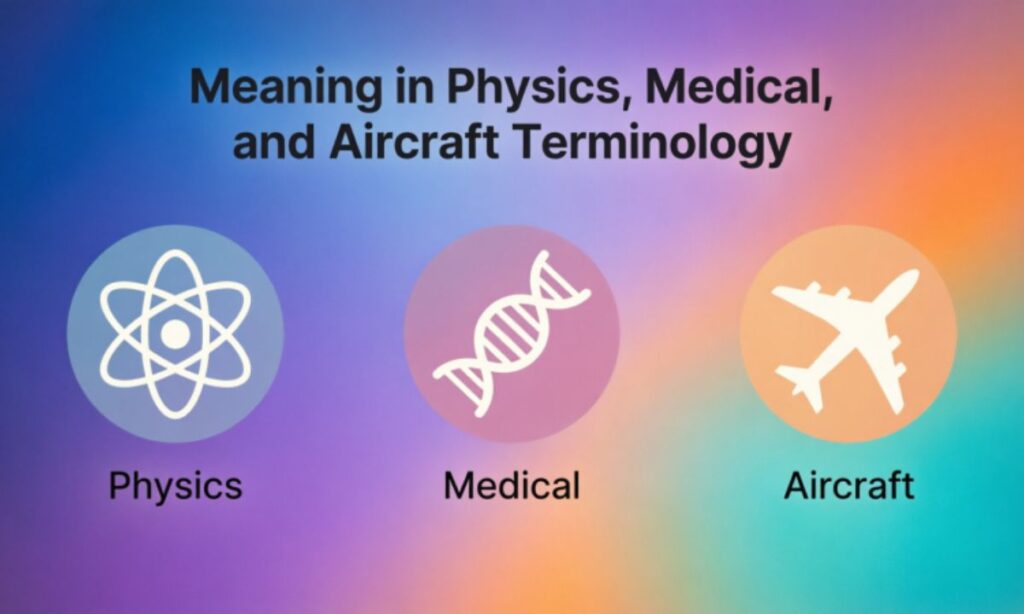
Outside the world of slang, ion has important technical meanings that have nothing to do with texting.
Physics & Chemistry
In science, an ion is an atom or group of atoms that carries a positive or negative electric charge as a result of gaining or losing one or more electrons. This is the definition you’d find in any chemistry textbook.
- Cation: A positively charged ion (lost electrons)
- Anion: A negatively charged ion (gained electrons)
Ions are fundamental to understanding electrolysis, chemical bonding, and atomic behavior.
Medical Terminology
In medicine and biology, ions play a critical role in bodily functions. Electrolytes — such as sodium, potassium, calcium, and chloride ions — regulate nerve impulses, muscle contractions, and fluid balance in the human body. When doctors mention ion levels in bloodwork, they’re referring to these essential charged particles.
Aviation & Engineering
In aerospace, ion propulsion is a form of spacecraft propulsion that uses charged particles (ions) to generate thrust. NASA has used ion drive systems in deep-space missions due to their fuel efficiency over long distances. The term also appears in aviation instrumentation systems and air quality monitoring equipment.
Summary Table
| Context | ION Meaning |
| Texting / Social Media | “I don’t” (slang) |
| Internet Forums / Chat | “In Other News” |
| Physics / Chemistry | Electrically charged atom or molecule |
| Medical / Biology | Electrolyte; charged particle in the body |
| Aerospace / Engineering | Ion propulsion; charged particle systems |
Common Misconceptions
Like any slang term, ION comes with its fair share of confusion. Here are the most common misunderstandings:
Misconception 1: “Ion must be a typo.” Not at all. It’s an intentional, stylized spelling that mirrors spoken pronunciation. Treat it like any other accepted abbreviation.
Misconception 2: “It always means science.” If you see ION in a text message or social media comment, it almost certainly means “I don’t” — not chemistry. Context clues make this distinction clear.
Misconception 3: “It’s rude or dismissive.” ION isn’t inherently rude. Tone depends on the sentence it’s in and the relationship between the speakers. “Ion care about drama” can be perfectly neutral.
Misconception 4: “It means ‘I’m on’ or ‘I know.'” Some people misread ION as “I’m on” or even “I know,” but these are incorrect interpretations. When in doubt, “I don’t” is the right read.
Misconception 5: “Only teenagers use it.” While Gen Z popularized ION, young millennials and adults in their late 20s also use it regularly across social platforms.
Similar Terms & Alternatives
ION belongs to a large family of digital shorthand expressions. Here’s how it compares to related slang:
| Slang Term | Full Meaning | Tone | Example |
| ION | I don’t | Casual, relaxed | “Ion feel like it.” |
| IDK | I don’t know | Neutral | “IDK what to do.” |
| IDC | I don’t care | Indifferent | “IDC anymore.” |
| NGL | Not gonna lie | Honest, candid | “NGL, that was bad.” |
| IKR | I know, right? | Agreeable | “IKR, it’s wild.” |
| IMO | In my opinion | Opinionated | “IMO, that’s wrong.” |
| TBH | To be honest | Direct | “TBH ion even like it.” |
Notice that ION and IDC are often used together — they both express a form of disinterest or refusal. ION tends to feel slightly more casual and speech-like, while IDC can carry a sharper edge.
How to Respond to ION
Knowing how to respond when someone uses ION in a conversation keeps things flowing naturally.
If they say “ion know”: Respond with helpful information or simply acknowledge it:
- “That’s okay, I can explain!”
- “No worries, I wasn’t sure either.”
If they say “ion care”: Don’t take it personally — it’s usually casual, not hostile. Match their energy:
- “Fair enough, lol.”
- “Same honestly.”
If they say “ion wanna talk about it”: Respect the boundary. A simple “No pressure” or “We can talk later” works perfectly.
If they use ION to change the topic (“In Other News…”): Go with the flow and engage with the new subject:
- “Oh wait, what happened?!”
- “Tell me more!”
The golden rule: match the tone. ION signals a relaxed, informal conversation, so keep your response light and easy.
Differences from Similar Words
It’s worth distinguishing ION from a few terms it sometimes gets confused with:
ION vs. IDK
Both express uncertainty or disinterest, but IDK (I don’t know) is more specific to lack of knowledge, while ION (I don’t) is broader — it can express refusal, indifference, or disagreement.
- “IDK who started it.” (uncertainty)
- “Ion even care who started it.” (indifference)
ION vs. NGL
NGL (not gonna lie) signals honesty or confession, whereas ION is a straight-up negation. They can appear together:
- “NGL, ion really like this song.”
ION vs. IRL
IRL (in real life) is used to distinguish online life from physical reality. No crossover with ION beyond both being acronyms used in digital speech.
ION vs. IMO
IMO (in my opinion) introduces a personal viewpoint. ION expresses refusal or negation. Both are casual but serve very different purposes in a sentence.
Relevance in Online Conversations & Dating Apps
ION has carved out a particularly interesting role in the world of online dating and relationship communication.
On apps like Tinder, Hinge, Bumble, and Instagram DMs, ION appears in flirty, playful exchanges:
- “Ion usually reply this fast but here I am 😅”
- “Ion do this for just anyone, you’re different”
- “Ion know why I’m still awake talking to you lol”
In these contexts, ION softens a statement while making it feel more authentic and spontaneous. Saying “I don’t usually reply this fast” feels more deliberate; “ion usually reply this fast” sounds natural, almost accidental — which reads as more genuine in casual romantic communication.
It also appears when someone is setting a boundary without coming across as harsh:
- “Ion really do the whole talking-to-multiple-people thing.”
- “Ion want anything serious rn, just so you know.”
The casual register of ION makes difficult or potentially awkward statements feel lighter and less confrontational — a useful quality in early-stage romantic conversations.
Why ION Works So Well Digitally
The reason ION has remained sticky in online communication comes down to a few key factors:
- Efficiency: Three letters instead of seven. In fast-moving chats, this matters.
- Authenticity: It mirrors how people actually talk, bridging the gap between speech and writing.
- Tone: It’s neutral enough to avoid sounding aggressive but casual enough to sound human.
- Cultural identity: Using AAVE-influenced slang signals cultural awareness and in-group belonging among younger users.
As linguists have noted, the rise of terms like ION reflects a broader shift in digital communication — where written text increasingly mimics spoken language rather than following traditional grammar rules.
Conclusion
ION is one of those small words that carries more weight than its three letters suggest. Whether it means “I don’t,” “In Other News,” or an electrically charged particle, understanding which meaning applies comes down entirely to context. In casual texting and social media, it’s a Gen Z staple that signals authenticity, speed, and a relaxed conversational tone.
Knowing how to read, use, and respond to ION is now a genuine part of digital literacy. As online language continues evolving at breakneck speed, staying fluent in common slang like this helps you communicate naturally — whether you’re texting a friend, replying to a TikTok comment, or navigating a conversation on a dating app. Ion overthink it — just use it when it fits.
