

If you’ve ever gotten a one-word reply that just says “alr” and wondered whether your friend is fine, annoyed, or just in a hurry, you’re not alone. This tiny abbreviation shows up everywhere group chats, DMs, gaming lobbies, even work Slack threads and it can feel confusing when you’re not sure what tone it’s carrying.
This guide breaks down the ALR meaning in text in plain, simple language. You’ll learn where it came from, how it’s used across different platforms and age groups, and how to tell the difference between a friendly “alr” and a slightly annoyed one. By the end, you’ll never second-guess this abbreviation again.
What Does ALR Mean in Text? (Simple Definition)
ALR is texting shorthand for the word “alright.” People use it to reply quickly when they agree, understand, or accept something without typing out the full word. It’s one of hundreds of casual abbreviations that keep online conversations short and fast-paced.
Simple Meaning in One Line
ALR = Alright, used to say okay, understood, or agreed in a quick, casual way.
What Does “Alright” Mean?
Before shortening it, it helps to understand the original word. “Alright” is an informal way of saying “all right,” meaning things are fine, acceptable, or agreed upon. It’s used to:
- Confirm plans (“Alright, see you at 6”)
- Show acceptance of information
- Signal that a conversation topic is settled
ALR simply carries this same meaning in a compressed, faster form.
Why Do People Use ALR Instead of “Alright”?
Speed and convenience drive almost every texting abbreviation, and ALR is no exception. Reasons people prefer it include:
- Faster typing on small phone keyboards
- Casual tone that feels more natural between friends
- Habit formed from years of texting culture
- Platform norms — apps like Snapchat and Instagram DMs favor short replies
Understanding the ALR Mean in Text pattern helps you see why entire generations have shifted toward compressed language in daily chats.
Origin and History of ALR
Where Did ALR Come From?
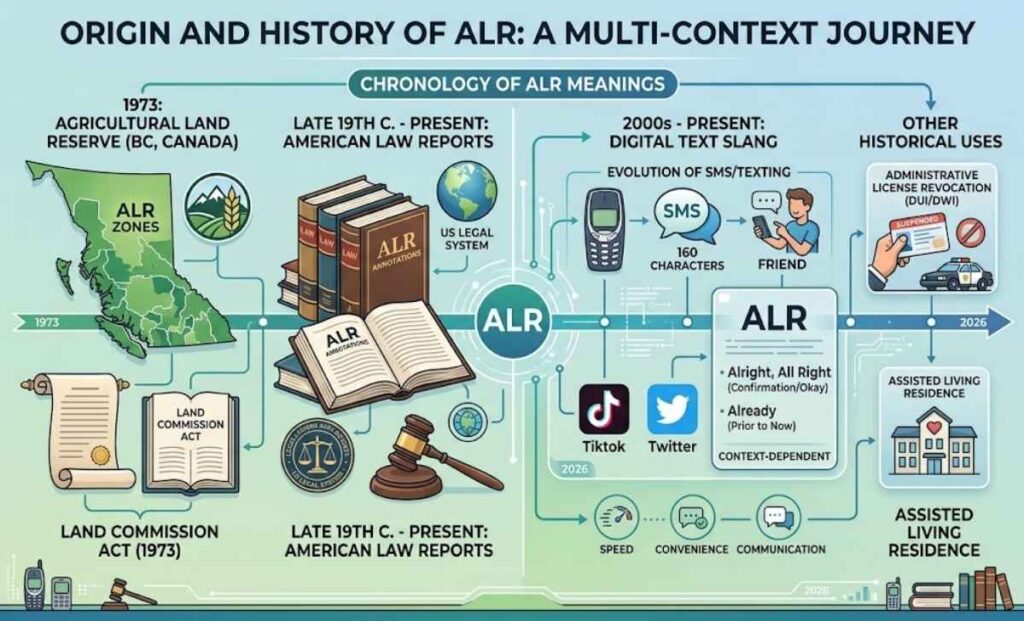
ALR traces back to early SMS culture in the 2000s, when phones had strict character limits and typing on numeric keypads was slow. Abbreviations like “u” for “you,” “gr8” for “great,” and “alr” for “alright” saved time and effort. As smartphones and messaging apps took over, these shortcuts didn’t disappear they became permanent parts of digital language, carried forward into WhatsApp, Instagram, and TikTok comments.
When Do People Use ALR?
ALR shows up in a wide range of everyday situations, such as:
- Confirming plans with friends
- Replying quickly during a busy moment
- Acknowledging instructions from a parent or manager
- Wrapping up a conversation politely
- Reacting to gaming teammates mid match
Different Meanings Based on Tone
The core ALR Mean in Text stays the same, but tone can shift how it feels. Here’s how context changes the read:
1. Friendly Agreement
“Alr, sounds good!” — warm, casual, and enthusiastic.
2. Slight Annoyance
“alr.” — short, flat, and possibly signaling irritation, especially with a period at the end.
3. Ending a Conversation
“Alr, talk later” — a polite way to close out a chat.
4. Neutral Response
“alr” — simple acknowledgment with no strong emotion either way.
Real-Life Text Examples With Explanation
Example 1: Making Plans
Friend: “Let’s meet at 7 near the mall.” You: “Alr, see you then!” This shows agreement and confirms the plan without extra words.
Example 2: Parent Texting Teen
Parent: “Be home by 9.” Teen: “alr” Here it functions as a quick, low-effort acknowledgment.
Example 3: Group Chat
Friend 1: “Movie night moved to Saturday.” Friend 2: “alr works for me” A casual, easygoing confirmation among a group.
Example 4: Gaming Chat
Teammate: “Push left side now.” You: “alr going” Fast, functional communication during active gameplay.
Example 5: Slightly Upset Tone
Partner: “I can’t make it tonight.” You: “alr.” The short, punctuated reply hints at disappointment or mild frustration.
Personality Traits of People Who Use ALR
People who frequently type ALR tend to:
- Prefer efficient, low-friction communication
- Text casually rather than formally, even with close contacts
- Value speed over grammatical precision in personal chats
- Adapt their tone through punctuation and emojis rather than full sentences
Is ALR Rude?
No, ALR is not inherently rude. It’s simply a casual abbreviation for “alright.” However, a bare “alr” with no emoji or follow-up in a serious or emotional conversation can come across as short or uninterested. Context and relationship history matter more than the word itself.
ALR vs Alright vs OK vs K
| Term | Formality | Common Tone | Best Used For |
| Alright | Semi-formal | Warm, complete | Any conversation, spoken or written |
| ALR | Very casual | Quick, relaxed | Fast texting with friends |
| OK | Neutral | Balanced | Everyday confirmations |
| K | Very casual | Often flat or cold | Quick replies, sometimes seen as dismissive |
Key Difference
ALR keeps a friendlier feel than “K,” which is often read as blunt or dismissive. Alright remains the most complete and least likely to be misread.
Modern Usage in 2026
ALR remains a staple of digital communication in 2026, especially across messaging apps, comment sections, and gaming platforms. While new slang terms rise and fall quickly, ALR has stayed stable because it’s simple, universally understood, and easy to type on any device.
Common Mistakes About ALR
Mistake 1: Thinking ALR Means “Already”
Although the letters could technically hint at “already,” in everyday texting ALR almost always means “alright.” If someone means “already,” they usually spell it out.
Mistake 2: Using ALR in Formal Writing
ALR belongs in casual chats, not emails, reports, or professional documents.
Mistake 3: Thinking It Is Aggressive
By itself, ALR is neutral. Any harsh tone usually comes from punctuation or the surrounding conversation, not the word itself.
Mistake 4: Writing It in Exams
Students sometimes accidentally slip texting shorthand into schoolwork. ALR should stay out of academic or formal writing entirely.
How to Use ALR Correctly
- Use it with friends, family, or casual contacts
- Add an emoji if you want to soften the tone
- Avoid it in professional emails or formal messages
- Pair it with a follow-up sentence if you want to sound more engaged
Emotional Meaning Behind ALR
ALR carries very little emotion on its own — it’s the surrounding punctuation, capitalization, and emojis that add feeling. “Alr!” feels upbeat, while “alr.” can feel closed-off or short.
Read More: IG Meaning in Text: Shocking Truth Revealed (2026)
Cultural Influence on ALR
Texting culture across English-speaking countries has normalized abbreviations like ALR as a form of digital identity. It signals familiarity with online spaces and comfort with fast, informal communication, especially among younger internet users.
ALR in Different Age Groups
Teens
Use ALR constantly, often without capitalization or punctuation, purely for speed.
Young Adults
Use it casually but may add emojis or extra words to clarify tone.
Adults 30+
Use ALR less often, typically reserving it for close friends or family.
Professionals
Rarely use ALR in work contexts, preferring “okay” or “sounds good” for clarity.
Is ALR the Same as “Aight”?
They’re closely related but not identical. “Aight” is a phonetic spelling that mimics how “alright” sounds when spoken quickly, while ALR is a letter-based abbreviation. Both mean the same thing and are used interchangeably in casual chats.
How ALR Changes Conversation Flow
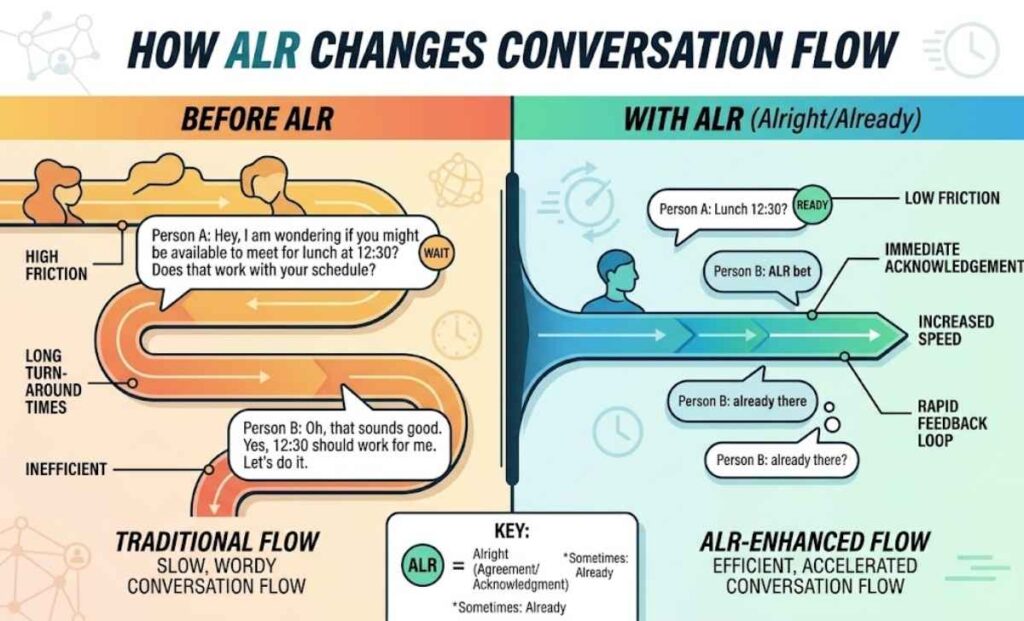
Positive
It keeps conversations moving quickly and feels natural between people who text often.
Negative
It can feel abrupt or vague in emotionally sensitive conversations, leaving the other person unsure how you really feel.
Read More: GC Meaning in Text: The Shocking Truth (2026 Guide)
Social Media Examples (2026 Style)
- TikTok comment: “alr this actually worked 😭”
- Instagram DM: “alr bet, let’s do it”
- Snapchat reply: “alr omw”
These examples show how the ALR Mean in Text usage blends into everyday social media replies without feeling out of place.
Should You Use ALR?
Yes, if you’re texting casually with people who use similar language. It’s quick, widely understood, and fits naturally into informal digital conversations. Just avoid it in professional or formal settings where clarity and tone matter more.
Frequently Asked Questions
What does ALR mean in text from a girl or guy?
It means the same thing regardless of gender — “alright.” Tone depends on context, not who sends it.
Is ALR the same as OK?
They’re similar, but ALR feels slightly more casual and personal than “OK.”
Can ALR mean “already”?
Rarely. In everyday texting, it almost always means “alright.”
Is it okay to use ALR at work?
It’s best avoided in professional messages; stick to “okay” or “sounds good” instead.
Does ALR ever sound rude?
Not by itself, but a blunt “alr.” without emojis can feel cold in serious conversations.
Conclusion
At its core, ALR is nothing more than a quick, casual way of saying “alright.” It reflects how digital communication has evolved to favor speed and simplicity while still carrying warmth, agreement, or acknowledgment depending on the tone around it. Whether you see it from a friend, a partner, or a teammate, context is always the real key to understanding what someone means.
Once you understand the ALR Mean in Text pattern, texting conversations become much easier to read. And if abbreviations and chat symbols interest you, exploring topics like Double Check Mark Meaning in Text can further sharpen how confidently you navigate modern digital conversations.
